Posts

Explaining factors to my Dad: Part 2

 Alright Dad, I think you have had a nice break since our last session ( Part 1 ). Do you have any questions before we proceed further? Dad: Nope, I think we are good to go forward. Okay...! Let's move to the rather more interesting part. Today, we are going to take what we had learned in the last conversation and move our discussion towards independent risk factors and their role in forming an optimal portfolio. But first let me ask you some questions regarding discount rates, just to make sure we are on the same page..! Tell me, if you are paying less for an asset's future profits, the implicit discount rates shall be more or less? Dad: Let me see....If I were to pay less for any future cash flows because I think it is risky, this means my expected return going forward is higher. This further means that the discount rate that is embedded into this little framework is going to be higher.  You are absolutely right..! The less you are willing to pay, you are implicitly discount...
Explaining Factors to my Dad: Part 1

 A couple of days ago a colleague of mine happens to ask me about the so-called "factors" that I keep referring to every now and then. When he asked me that question, I was a bit confused. Not because I didn't have a detailed understanding of the topic. But because of the fact that he did not have a finance background. Hence, as soon as he asked me that question, I immediately started thinking, "What would be the simplest and best possible explanation regarding these risk factors that will not require any sorts of preliminary understanding of financial theories?". After thinking for a while, I think I have come up with an answer. I am going to structure this piece like Plato's dialogue and take the role of Socrates (no, I am not wise like Socrates, but let me have my moment alright!). Also, the other party in this dialogue, my dad is a businessman so he does have a basic understanding of things like sources of capital (debt and equity), managing leverage, et...

Why volatility is (in fact) a risk?

I come from the school of value investing. The idea of finding bargains and paying less compared to what it is worth excites me. In the light of the long storied success of value investing, some of its big proponents like Warren Buffett, Howard Marks, Monish Phabrai, etc. like to frequently point out to the general investing public that you should not fear the volatile markets and the effect that it is having in your portfolio. Well, right there, I have a problem. I know what they are trying to say and what the rationale behind that perspective is. The idea is that if you have done a deep fundamental analysis about a certain company, you do not need to worry about the daily fluctuations. Even if the stock price drops 20 percent in a short period of time, you should not take any action. In fact, some might even go on to say "If that happens, you gotta buy more because it is now cheaper than what you had previously paid!" Most of the stock-picking value investors also would not...

BLACK'S EXPLANATION OF NOISE VS INFORMATION

Image
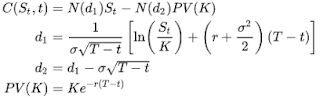
If you are a student of finance, you must have surely heard or seen the infamous Black- Scholes option pricing model. For those who do not about the model, it is basically an equation or a framework by which we can determine the prices of options. Options are one of the major financial derivative security. Fischer Black and Myron Scholes published the paper in 1973 thereby developing the whole derivatives industry.  The famous Black- Scholes Option Pricing Model The above is the formula for which Fischer Black is most well known. However, there is another paper he published in 1986 in the Journal of Finance titled "NOISE" . This paper I believe is very much relevant in today's Finance and Economics industry. Actually, if you think about it, it goes beyond just Finance and Economics and can be traced back to every major discipline or event that happens in our world on daily basis. So, let's start by reviewing what Black thinks about NOISE. The reality of the world: Noi...

My move away from traditional stock picking process

I cannot exactly remember what was the thing that made me so much interested in the Investment management business. If my memory serves me right, I think it was a documentary of Warren Buffet that I saw about 9 years ago. It was really something special, a true eye-opener for me, at least at that time. From there onwards, I got introduced to the world of value investing and along with that many such notable value investors like Charlie Munger, Joel Greenblatt, Monish Phabrai, Guy Spier just to name a few. I read everything I could find for free on the internet. After that, I went for books thinking that this is the secret to success. And, by success here I mean to make big money. As time went on, I began to dig deeper into the world of investments and different investment and trading strategies. At this point, I had pretty much a thorough understanding of how do value investing works.  After a while, I started to realize many things that I felt pretty uncomfortable about. The whole...